Annual men's pro-club funding
That's two-thirds of the WRU's earnings before tax and other deductions - committed to the men's professional clubs.
 Dyfodol Rygbi Cymru
THE MEN'S PROFESSIONAL GAME
Professional rugby is facing serious commercial pressures worldwide. As a smaller rugby nation, Wales feels those pressures more acutely and has less financial headroom to respond. Despite the challenges, the Welsh Rugby Union is committed supporting the grassroots, investing in young talent and restoring the place of our national teams at the top of the global game.
Why change?
Welsh rugby has been at a crossroads, on the pitch, financially and structurally - for far too long. It is clear that the nation's elite system is no longer achieving its aims and is not sustainable.
The challenges facing the Welsh professional game are both local and global and have been building for many years.
Broadcast and commercial revenues are under pressure, costs are continuing to rise and the required private investor funding commitment has increased significantly.
Without action, the gap between Welsh teams and their competitors is expected to widen - both in terms of finances and performance.
That's two-thirds of the WRU's earnings before tax and other deductions - committed to the men's professional clubs.
A new talent and insight team to identify and track promising players, additional specialist coaches working directly with our professional clubs and a new national network of men's and women's player development centres across the country.
Direct investment and dedicated support are helping to strengthen community rugby clubs and their localities, ensuring inclusive and welcoming environments for all male and female players, families, volunteers and supporters.
A semi-professional league - anchored in heritage clubs and communities - providing a vital platform for developing elite talent.
Where it goes
Changing the professional club model does not guarantee success, but the additional pathway investment realised by the changes improves the probability of it. Success will be judged by sustained performance improvements from both the men's and women's national teams, stronger club competitiveness, better retention of players, growth in Welsh qualified depth, stronger pathway progression and a more resilient community game.
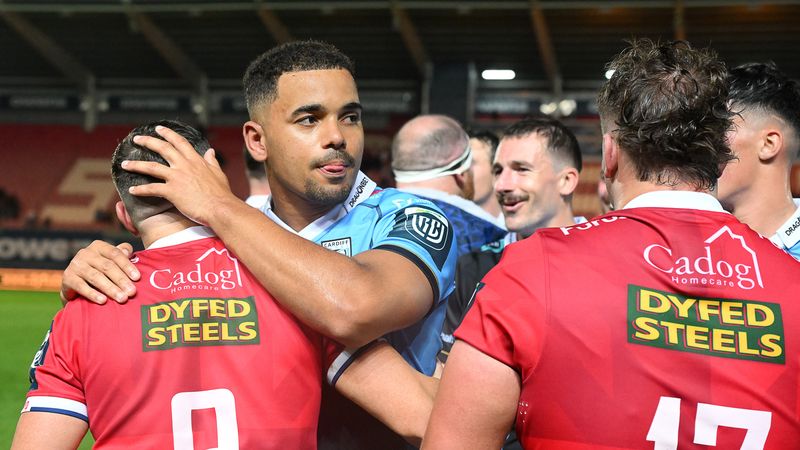
In 2025, all four current professional clubs - Cardiff Rugby, Dragons RFC, the Ospreys and the Scarlets - agreed on the principles of a new financial and rugby focused deal with the WRU.
The agreement increases collaboration across the entire elite rugby system and underpins the working relationship between the WRU and the men's professional teams. It also helps them to establish financial stability through to June 2028.
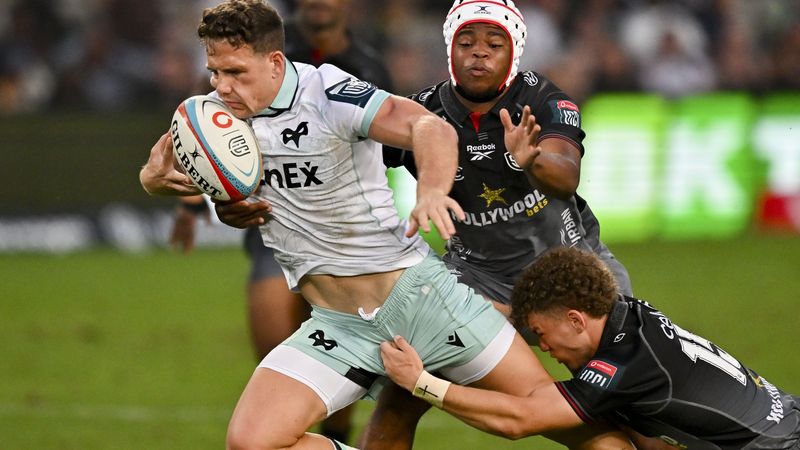
The WRU has around £20m a year to invest in the men's professional game. For the next two years the WRU will be funding the four current teams at £6.5m per year - that is unsustainable beyond 2028.
£20m from the 2028/29 season would be £5m each in four-club model. For the new three club-model it equates to £6.7m per team.
Without this change we will not have the funding required funding to build the new player pathway the Welsh elite system urgently needs.

Our elite system is not currently producing enough Welsh qualified talent to sustain four professional teams competitively.
Spreading our best players across four squads means fewer quality playing minutes, less strength in depth, and less team cohesion.
Concentrating that talent into fewer teams gives us stronger, more competitive squads, and a higher standard of week-to-week rugby feeding directly into our national sides.
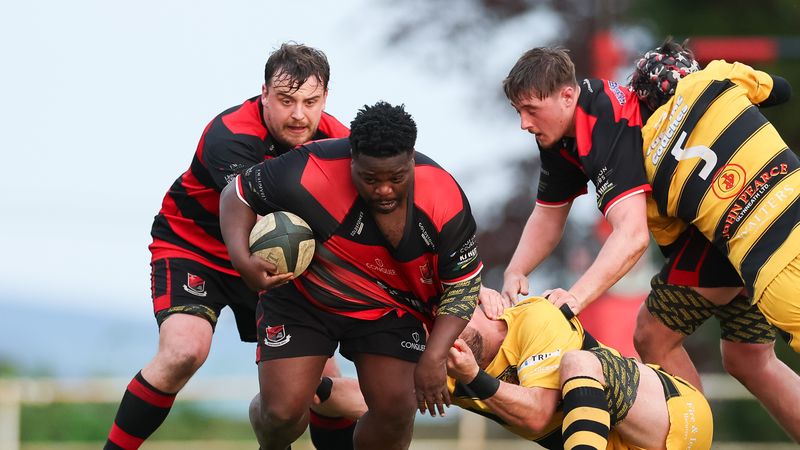
The new Community Investment Model is a fundamental shift in how the WRU invests in the grassroots game.
From the start of the 2026/27 season clubs have been awarded Platinum, Gold, Silver or Bronze status based not only for what they achieve on the pitch, but also for the strength, sustainability and governance they demonstrate off it.
More than 65% of community clubs have achieved the highest possible ‘Platinum’ accreditation rating.
Rather than funding based primarily on player participation, the framework recognises clubs that demonstrate excellence across areas including governance, business planning, safeguarding, inclusion, volunteer development, facilities and player pathways. The aim being to create stronger, more resilient clubs which play an essential role at the heart of their communities.

The WRU offer a range of educational courses and learning opportunities that enable community clubs to increase their skillset and help create safe and positive playing environments.
Our coaching pathway is built to be adaptive and supportive, matching coaching education to the specific needs of the players, from mini and juniors right up to the adult game.
We are also responsible for recruiting, developing and producing referees and match officials to officiate games and matches at all levels within Welsh rugby and throughout the world.
The WRU support community rugby clubs with a series of free training resources which all help create safe and positive playing environments. All training is delivered by highly qualified and experienced WRU accredited educators, these include first aid, medical awareness, anti-doping and safeguarding.
From the start of the 2026/27 season, the WRU has introduced a new proactive reporting system. This is supporting community clubs in reporting and managing incidents and injuries on a game by game basis.
The new Proactive app gives clubs with a simple way to log and report incidents and injuries, track suspected concussions and record hazards through an easy-to-use reporting platform.
The system is free to all clubs and allows players, coaches and parents to track return to play protocols and support player welfare.
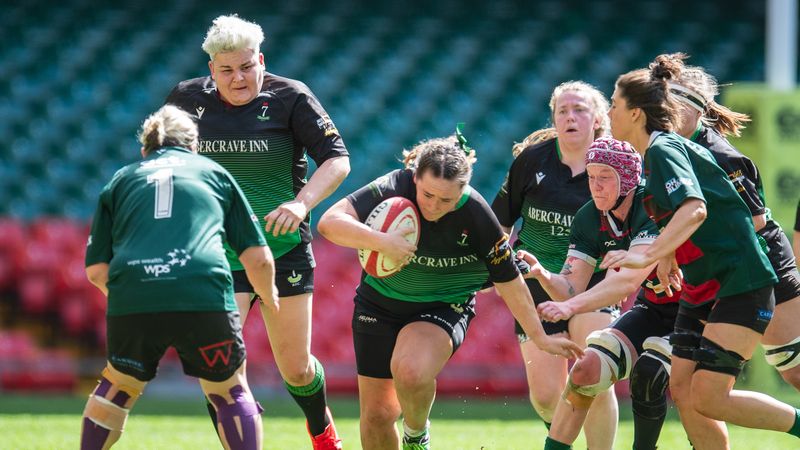
WRU organises community competitions spanning 34 men's and women's National Leagues and almost 4000 individual fixtures.
These provides meaningful fixtures on a weekly basis for almost 15,000 registered senior players at more than 270 WRU member clubs, the length and breadth of the country.
In addition to this, there are 10 senior National Cup competitions with the finals being held in Cardiff at the Road to the Finals events which attract thousands of supporters each year.
Our regional community staff also oversee hundreds of respective league and cup competitions across all areas of the country - providing playing opportunities for thousands of young people agred between 12 and 18.
Our new Rygbi Cymru app launched at the start of September 2026 is allowing volunteers, players and supporters a unique opportunity to track the more than 12,000 rugby matches - from Under 12s through to Super Rygbi Cymru - that will take place in every corner of the country across the 2026/27 season.

Women’s and girls' rugby in Wales is not just growing, it’s evolving. With the right structures and investment in place, we are confident that it will become one of the most exciting and inclusive sports in the country.
Many, many more fans are starting to follow both our national and club sides. Young girls and women are keen to experience playing the game, and brands and sponsors can see a positive, exciting connection to build with the sport.
There is a misconception that the development of the women’s game is somehow coming at the expense of the men’s game - that is simply not the case. The WRU recognised the opportunity for growth that comes from the investment in women’s rugby a number of years ago and has been building that steadily.
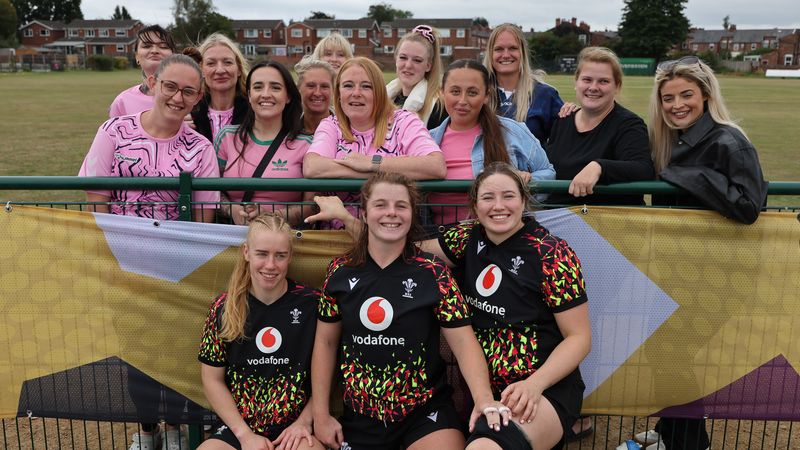
Our Women's National Academy and Player Development Centres are linked directly to the professional club system and into the national squads.
Our two women's professional teams - Gwalia Lightening and Brython Thunder - have already proven themselves as breeding grounds for success, accelerating the playing careers of a number of internationals.
Both teams play in the Celtic Challenge - our main women’s league competing - against teams from Ireland and Scotland. These cross-border opportunities are continuing to give Welsh players the exposure they need to thrive in a high-performance environment.
A new senior domestic competition will be created to sit beneath the Celtic Challenge, providing a vital platform for aspiring players and a stronger connection to the pathway.

At the heart of the new system is a new Men's National Academy which will bring together the country’s most promising players in one coordinated programme.
The challenge is not to replicate models in other rugby nations, it's to create a pathway based on Wales’ unique strengths.
Working in a co-ordinated way across three regional training centres, we will ensure that high potential players, access world-class coaching, performance support, and education to prepare them for professional and international rugby.
The Men's National Academy will cater for up to 80 full-time contracted players aged 18–23, with additional part-time provision for younger players.
A new Women's National Academy for the same age group is also being established.
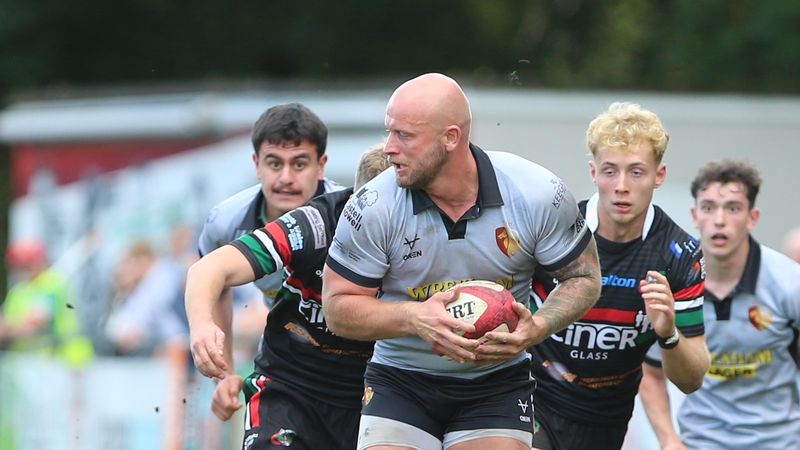
Sitting underneath the Men's National Academy will be 12 Player Development Centres. These will identify and nurture players from 14–18 years old, ensuring every talented player, wherever they live in the country can access a clear, supported pathway. The renewed pathway will better connect community clubs, schools, and universities with the national performance system.
The player developments centres locations are currently being determined, with proximity to Super Rygbi Cymru clubs an additional consideration. Ensuring coverage across all regions of the country with high-performance training opportunities hopefully no more than one hour away in travel time.
Talented players in the women's pathway will be supported by three existing Player Development Centres in Colwyn Bay, Swansea and Cardiff. These are complemented by 11 satellite sites in various locations, and 43 girls hubs - all based at community clubs.
Over the longer term we will deliver a fully integrated men's and women's pathway from age 14 to senior professional rugby.
Super Rygbi Cymru is key part of the elite rugby system. A semi-professional competition which plays an intergral role in the future talent-development system of Welsh rugby.
The ten current teams in Super Rygbi Cymru are embedded in rugby heritage and traditional rugby strongholds - they are Aberavon, Bridgend Ravens, Cardiff RFC, Carmarthen Quins, Ebbw Vale, Llandovery, Newport, Pontypool, Swansea RFC and RGC (Rygbi Gogledd Cymru).
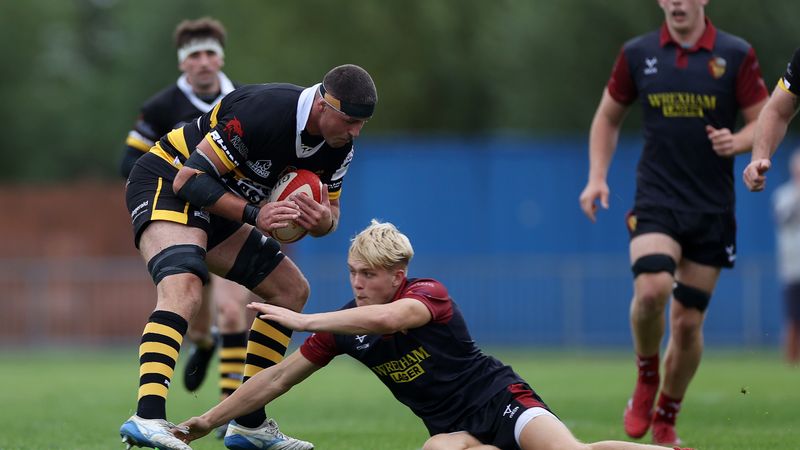
The WRU is currently engaging with clubs and other stakeholders to develop a long-term, fully aligned system in which Super Rygbi Cymru provides a vital bridge between our talent pathway and professional rugby.
As part of this work, we are actively reviewing the number of teams in Super Rygbi Cymru and how they connect with the 12 planned Player Development Centres.
Importantly, we want to ensure that areas with a strong record of producing talent are appropriately represented in any future expansion.
Challenges off and on the pitch
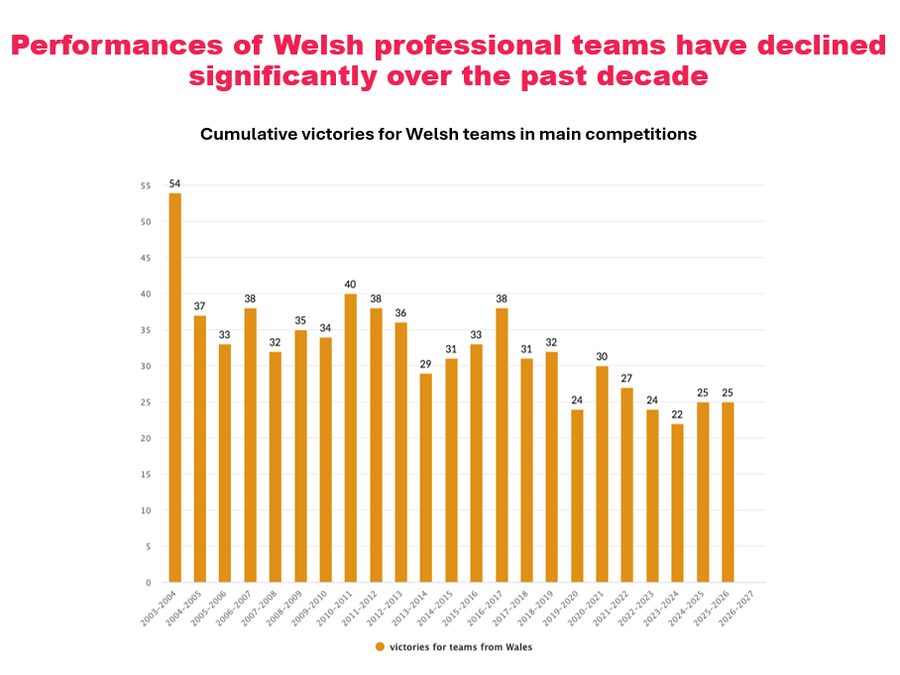
Our current professional teams are only winning 1 game every 3 in regular competition. Take out the Welsh derbies and that falls to nearly 1 in 4.
Since the modern United Rugby Championship began in 2021, no Welsh team has progressed past the quarter-finals.
During most seasons, only a solitary Welsh team has managed to make the playoffs at all.
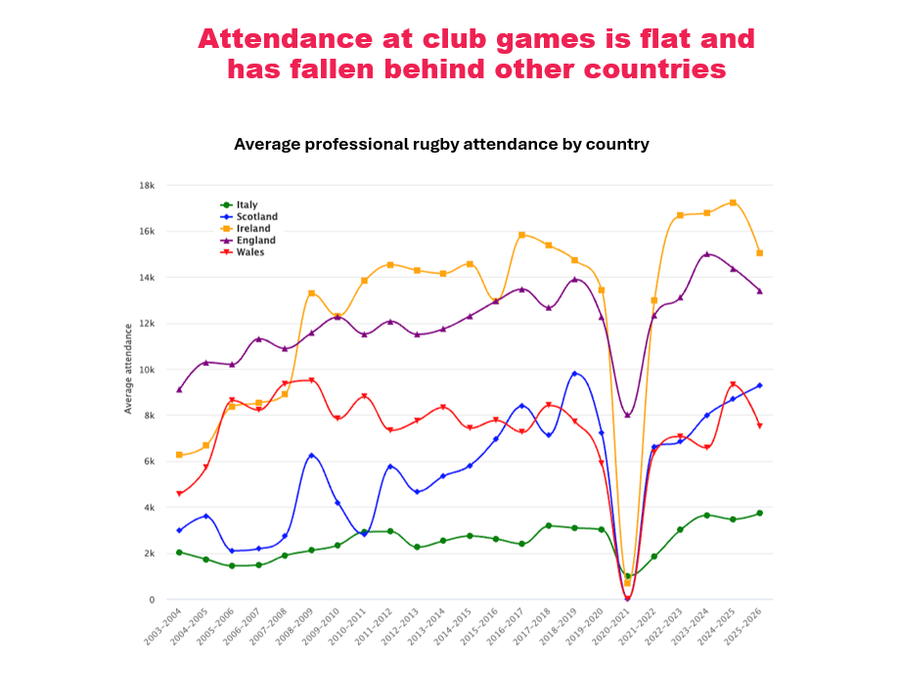
Having once been on a par with teams in Ireland and Scotland, attendances at Welsh professional clubs have fallen over the past two decades.
In recent years the crowd numbers have flatlined and are slipping behind other countries.
Welsh club rugby is finding it increasingly difficult to compete in today's attention economy. Without improved performances that will continue.
Concentrating talent into fewer competitive men's professional teams creates better cohesion, more consistent selection, and a higher standard of week-to-week rugby – feeding directly into the strength of national squads.
A team in the east, one in the west and another in the capital.
Work will begin soon with the current professional clubs aimed at shaping the future licensing model.
Agreeing the new licence requirements and licensees.
What it means?
These changes will deliver more competitive rugby for Welsh fans, stronger pathways for emerging players, resilient community clubs and an elite game - men's and women's - accessible to communities across the country.
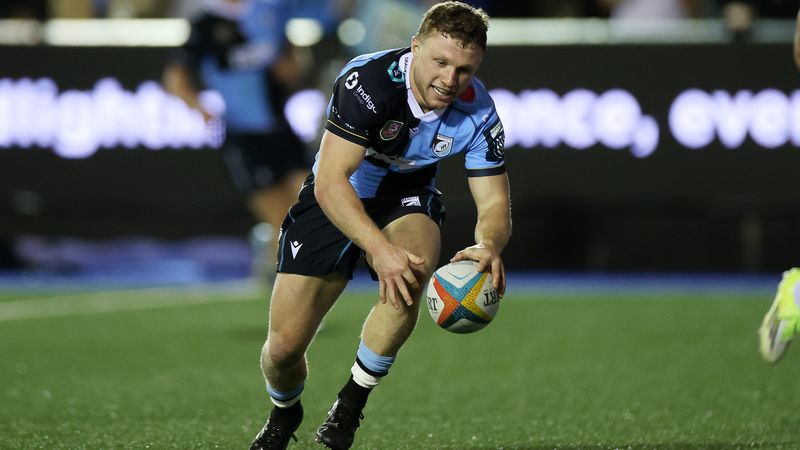
From a playing opportunities perspective changing the existing model means concentrating talent into fewer teams.
This is aimed at having teams with predominantly Welsh qualified players and squads that include only the highest standard non-Welsh qualifies players. This in itself will create more playing spots for Welsh talent.
The aim being to create circumstances for Welsh clubs to thrive at the top level, competing for league and cup titles.
In turn this will expose players to critical elite development moments in high-pressure games.
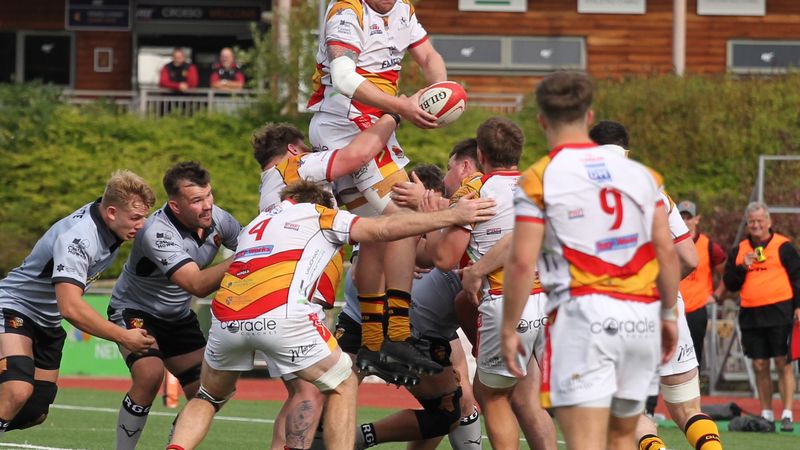
An updated and aligned player pathway will be supported by quality competitions.
Super Rygbi Cymru is already providing quality domestic rugby and significantly enhanced playing opportunities.
Central to this will the implementation of a consolidated and carefully shaped player allocation system.
This will ensure that emerging talent is placed in the best environments at each stage of their development.

Welsh men's professional teams are not delivering the results that rugby fans want to see.
Performance has declined significantly over the past decade. In recent seasons Welsh teams have only won, on average, one game in every three they have played. Take out Welsh derbies and that figures drops to nearly one in four.
As a result, average attendances have flatlined and fallen behind other countries. Fans want to see winning teams and our current sytem is not delivering those.
Reshaping our men's professional system is aimed at creating consistently competitive clubs that challenge in the play-offs of their competitions.
Achieving that will lead to more big decisive games being played in Welsh stadia and naturally to more fans coming through the gates to watch them.
The WRU has recently outlined its key partnership criteria for commercial organisations and external providers who want to contribute positively to the future of Welsh rugby – namely any such partnerships need to:
strengthen clubs, schools and communities rather than create parallel structures
support and strengthen national player pathways
avoid financial barriers to participation
help develop girls’ and boys’ rugby through quality age-appropriate coaching, officiating and club support
protect player welfare and safeguarding standards
align with WRU strategy and governance
The WRU believes that the aims of its One Wales strategy align with the social responsibilities of our current and prospective commercial partners.
The WRU has had to make difficult decisions over the past year as we work towards the ambitions of our One Wales strategy and ensure that Welsh rugby is successful and sustainable at every level. We have sought to keep our stakeholders and the public informed as much as possible as to the decisions that have been made, and the reasons for them, as matters have developed. We are now providing this detailed update to draw together those decisions, and the reasons for them, in one place.
In 2025 the WRU conducted a record-breaking consultation and engagement exercise across the country.
The consultation ran for four weeks and was open throughout the month of September.
In all there were more than 30 face-to-face stakeholder meetings with key groups across the game. A public survey attracted more than 7,000 responses.
The WRU heard a range of strong and consistent feedback that change was necessary and that current four-club model was not delivering sustainable performance.
The three-club model emerged as the most responsible balance between ambition and stability.
The September 2025 consultation explored, amongst other things, the changes required to the current four equally-funded professional club model. In view of the financial position of the four clubs and the WRU, this model is no longer sustainable beyond 2028.
The ideal model proposed in the consultation was for two men’s professional teams. That model was addressed alongside three others (four clubs with unequal funding, three clubs with equal funding, and three clubs with unequal funding). It was also acknowledged that there may be alternative options.
There was consensus that the current four-club model is financially unsustainable and underperforming. No group advocated for maintaining the status quo.
Amongst players, clubs and supporters, there was strong resistance to reducing the number of clubs to two, and the feedback cited risks to regional identity, player pathways, and fan engagement.
A three-club model was seen as a compromise, which would reduce the disruption involved in moving to two clubs as well as improving overall squad depth.
Amongst former players and experts, there was greater openness to the possibility of consolidation between existing clubs, provided the process was carefully managed and included reform.
Hybrid models, such as a “two plus two” system (comprised of two elite and two development teams), were also discussed but were regarded as particularly challenging to implement.
In addition to the consultation feedback the WRU obtained independent advice with respect to the number of men’s professional clubs from a performance perspective. We also collated information which we considered to be relevant to the question of where future professional clubs should be based.
Having listened to the feedback and considered the additional information obtained, the WRU announced in October 2025 that licences would be awarded to three equally-funded men’s elite teams with those licences being issued for a club in the capital, a club in the west and a club in the east.

Following the October 2025 decision, the WRU decided to test further the underlying data and any implications for our decision as to the future locations of the men’s professional teams.
Keystone, an economic, strategy, and technology consulting firm, was engaged to identify, gather, consolidate and evaluate the available data relevant to the future locations and to present this data, and identify any themes emerging from it, to the WRU Board for further consideration.
That work assessed the four existing clubs across six objective factors relevant to the goals of the WRU's Cymru'n Un - One Wales strategy.
These were:
population and accessibility
rugby infrastructure
financial sustainability
player pathways
sporting performance
fan support and heritage
The WRU Executive proposed greater weighting be assigned to the factors which are least likely to change materially (including population and accessibility and rugby infrastructure), with less weight being given to those factors which are more likely to change in the future such as financial sustainability, player pathways and sporting performance.
The WRU Board considered the matter in July 2026 and collectively affirmed its October 2025 decision to award the three future licences to teams located in east Wales, the capital and in west Wales. It also agreed that the new licences for the capital and for the east would be offered to the incumbent professional clubs in those areas - if they accepted the terms of the new licensing framework.

The WRU leadership has been meeting with community clubs and others since the start of the 2026/27 season and that direct engagement will continue through until our annual general meeting in late November 2026.
In early December 2026, all key stakeholder involved in the running of the men's professional game are planned to come together for a 'State of the Game' summit to understand better the challenges facing the sport - both nationally and internationally.
The summit is proposed to include the management teams and boards of the current men's professional teams alongside the WRU Board and Executive Team. The event will be independently facilitated and hear from a range of speakers about the current state of the game and future projections regarding the professional game in Wales and beyond.

In January 2027, a series of detailed workshops will get underway to determine the new licensing framework.
These will be independently facilitated with the initial task to define the characteristics of a successful future professional rugby system and then agree the design principles of the new licences.
The next step will be to review and assess a small number of realistic future operating frameworks.
The process will close with a workshop aimed at identifying areas of alignment and testing the practical implications of implementation of the new licensing framework.
In March 2027, the WRU Board will consider options for the new licence requirements.
Once approved the new licencing award process will get underway. A key aim being to move quickly to confirm future licence arrangements and transition plans. The intention being to complete awarding and announce the outcome by the end of June 2027.
This will minimise uncertainty for players, staff, investors, sponsors and supporters and avoid prolonged periods where current teams are operating without clarity regarding their future status.
It will also then provide one full year for the changeover ahead of the the 2028/29 season.
Key decisions
Welsh rugby has debated changing the men's professional game for many years - but has always failed to act, until now. Avoiding change would be easier. Delivering it is harder, but necessary.
At the outset of the consultation, which focused on elite rugby in Wales including the men’s and women’s national teams at all ages, men’s and women's professional teams, and the men's and women's academies and development centres, the WRU published a comprehensive consultation document. That can be read in full here.
The WRU Board analysed and debated the outcome of the public and stakeholder engagement carried out during what was one of the largest consultations ever conducted in Welsh sport. A report addressing the outcome of the public engagement survey can be found here
In October 2025, it was announced that, following the consultation, the WRU Board had decided to move to a three-club licence model, with one club to be based in each of the east, west and capital. Further information regarding the new model was set out in 'The Way Forward' presentation, accessible here.
In June 2026, the WRU instructed independent experts, Keystone, to assess the geographic distribution of the three licences. The resulting report, with one page containing personal data removed, can be accessed here.
Following consideration of the report by Keystone, the WRU Board affirmed its previous decision to award the future three licences for professional men’s rugby in the east, west and capital. It also decided that the three licences be awarded to the incumbent professional clubs and that, contingent on the agreement of the final licensing terms, the east and capital licences therefore be allocated to Dragons and Cardiff Rugby. An overview of the reasons for those decisions can be read here
The transition timeline
Face-to-face meetings with the rugby family in communities across the country.
Discussion with Professional Rugby Board and others.
All involved in the running of the men's professional game will come together to understand better the challenges facing the sport - both nationally and internationally.
Structured professional rugby stakeholder workshops aimed at shaping the design principles and final criteria for the three new professional club licences.
Following the development of the new icensing framework WRU Board will review the recommended model and determine the next steps.
Once approved the new licencing award process will get underway. A key aim being to move quickly to confirm future licence arrangements and transition plans.
The new three-team model will be announced a full year out from the changeover. This will minimise uncertainty for players, staff, investors, sponsors and supporters.
The east, capital and west based men's professional clubs start competing in the 2028/29 rugby season.
The WRU will review the new operating model ahead of the 2029/30 season. This will form part of the next 5-year strategic plan.
We want to arrive at the three-club model by consensus. We are working closely with the Scarlets, Ospreys, Cardiff Rugby and Dragons RFC through the Professional Rugby Board. Assuming all four current teams wish to participate in the new structure, there will be a licence award process in the first half of 2027 in a format determined by the WRU Board, reflecting the positions reached by that point.
Put simply the combined overheads and outgoings for current professional clubs have increased more than income. The WRU cannot invest at a sufficient level for the clubs to be competitive without significant additional funding from benefactors and/or private investors.
The different models for the men’s professional game considered by the WRU were set out in its 2025 consultation and the considerations which arose with respect to the location of the three licences going forward are explained further here. The decisions taken to date with respect to such arrangements have been based on the information available to the WRU at the relevant time and the WRU reserves its right to reassess matters should there be new developments.
Player contracts are protected. All existing player contracts have been underwritten by the WRU to help retain top Welsh talent at home. The three new licensees will run larger squads of up to 45 players, with increased back‑room support. The system currently includes over 30 non‑Welsh qualified players. That number will reduce, but there will still be scope for select non‑Welsh qualified marquee players who add maximum value.
North Wales remains important to the national rugby system. The men's professional game is centred in south Wales, but RGC - based in Colwyn Bay - is a founding member of Super Rygbi Cymru. Clubs across the north have major role to play developing young players and continue to be supported through our community investments.
Our public commitment
We will publish addional information as the licensing process develops.